A biospecimen can remain valuable long after the day it is collected. Samples preserved during clinical trials and biobanking programs may be analyzed months or years later as researchers investigate biomarkers, validate assays, study treatment response, or apply technologies that were not available when the sample was originally obtained. Maintaining sample integrity throughout that time is critical to protecting both the research and the data it produces.
Cryogenic storage helps make long-term preservation possible by maintaining biological materials at extremely low temperatures that slow the biological, chemical, and enzymatic activity responsible for degradation. For biobanks and clinical trials, controlled cryogenic conditions can help preserve sample quality, viability, and analytical usefulness for downstream testing. Reliable preservation is especially important when samples are rare, patient-specific, collected at defined trial timepoints, or otherwise difficult to replace.
Storage conditions can also influence the reliability of clinical research. A compromised sample may affect assay performance, introduce variability, or make comparisons across patients, study sites, and timepoints more difficult. Maintaining controlled conditions, complete records, and sample traceability gives researchers greater confidence that their results reflect meaningful biological differences rather than changes introduced during storage or handling.
Precision Stability Storage provides controlled Cryogenic Storage, Ultra-Low Temperature Storage, and cGMP Biostorage Solutions for organizations managing critical biological collections. With off-site storage options for research, clinical, and therapeutic materials, Precision helps biobanks, sponsors, CROs, pharmaceutical companies, and biotechnology organizations protect valuable samples while supporting long-term research and clinical development.
Key Takeaways
- Cryogenic storage slows biological and chemical processes that can compromise biospecimen quality, helping preserve samples for future research and clinical testing.
- Reliable sample preservation supports reproducible results, biomarker analysis, batch testing, long-term follow-up, and retrospective research.
- The appropriate storage method depends on the sample type, viability requirements, study protocol, intended downstream testing, and length of storage.
- Clinical trial sample management involves more than temperature. Traceability, chain of custody, monitoring, inventory controls, backup capacity, and complete documentation are also essential.
- Off-site cGMP biostorage can provide scalable capacity and sample management support when growing collections begin to exceed an organization’s internal infrastructure.
What Is Cryogenic Storage in Biobanking?
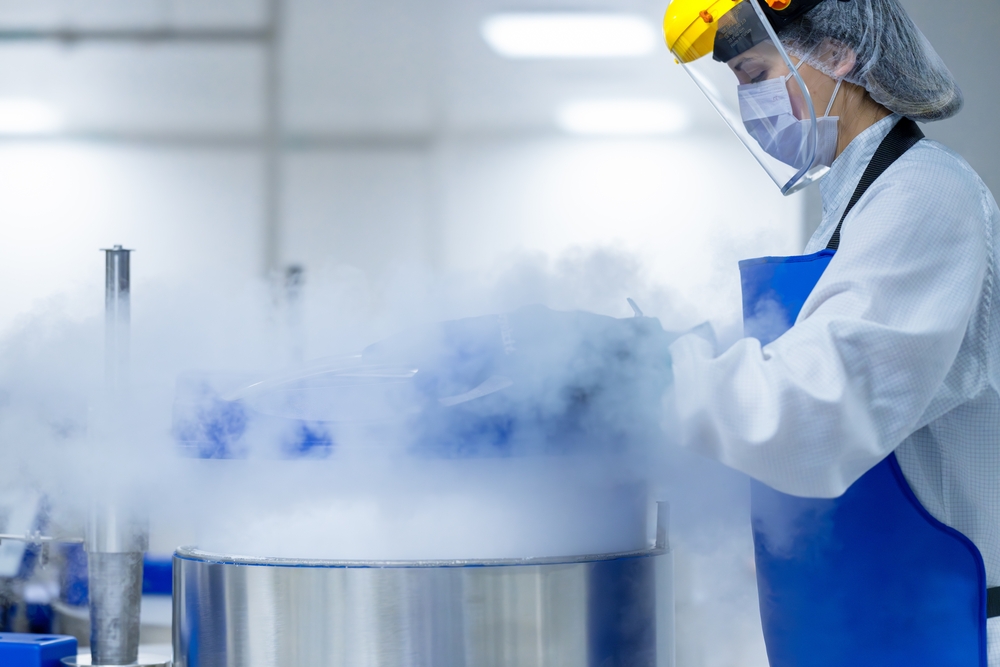
Cryogenic storage is the preservation of biological materials at extremely low temperatures to maintain their integrity, viability, and usefulness for future research or clinical testing. In biobanking, cryogenic conditions generally refer to temperatures below approximately -150°C and are commonly achieved through liquid nitrogen systems. At these temperatures, biological activity slows dramatically, helping protect sensitive samples during long-term storage.
Cryopreservation refers more broadly to the processes used to prepare and preserve biological material at very low temperatures. Depending on the sample, this can include controlled freezing procedures and the use of cryoprotective agents before materials enter long-term storage. The goal is to preserve the characteristics that will matter when the sample is eventually retrieved, whether researchers need viable cells or material suitable for molecular analysis.
Biobanks and clinical research programs may preserve cells, tissues, blood products, plasma, serum, DNA, RNA, nucleic acids, and advanced therapy materials. The appropriate conditions vary because these materials do not have identical preservation requirements.
Cryogenic storage should also be distinguished from Ultra-Low Temperature Storage, which commonly uses mechanical freezers operating around -80°C. Ultra-low conditions can be appropriate for many biological samples, while other materials require the lower temperatures provided by liquid nitrogen storage. The study protocol, sample characteristics, storage duration, and intended downstream use should ultimately guide that decision.
Why Cryogenic Storage Matters for Biobanks and Clinical Trials
A biospecimen often becomes more valuable as research progresses. Samples collected today may support future biomarker discovery, retrospective analyses, or studies that connect biological findings with long-term patient outcomes. Because many clinical trials extend over several years, preserving sample quality from the moment of collection is essential for producing meaningful and reproducible results.
Improper storage can introduce variability that affects assay performance, weakens data integrity, or limits the usefulness of valuable patient samples. Even subtle changes in storage conditions may alter proteins, nucleic acids, or living cells in ways that influence downstream testing. This is particularly important in multicenter clinical trials, where samples may originate from numerous collection sites. Standardized collection, handling, transport, and storage procedures help limit pre-analytical variability before samples are transferred to a central or off-site storage location for longer-term preservation.
Cryogenic storage is especially important for samples that cannot easily be replaced. Rare disease specimens, pediatric collections, longitudinal study samples, and personalized therapies often represent unique moments in a patient’s treatment journey. Protecting these collections preserves not only today’s research but also future opportunities to answer new scientific questions as analytical technologies continue to evolve.
This is why many sponsors, CROs, pharmaceutical companies, and research institutions rely on specialized biorepository services and Cryogenic Storage providers. Centralizing long-term storage with a qualified off-site partner can provide a consistent, controlled environment once samples arrive while supporting traceability, documentation, inventory management, and the quality systems required throughout the clinical research lifecycle.
Key Applications of Cryogenic Storage in Biobanking and Clinical Research
Cryogenic storage supports research across the life sciences, from large population studies to highly targeted therapeutic programs. Although the purpose of each collection may differ, these programs share a common need to preserve biological materials in a way that maintains their usefulness as new clinical and scientific information becomes available.
Population biobanks may preserve specimens from thousands of participants for longitudinal, genetic, epidemiological, and public health research. Because these collections can span many years, researchers may eventually pair stored biological material with changing health information to investigate disease risk, environmental factors, or long-term outcomes.
Disease-specific biobanks take a more focused approach by collecting specimens associated with particular conditions, phenotypes, treatments, or patient populations. These repositories can be especially valuable for rare disease research, where individual samples may be difficult to replace and every well-characterized specimen can contribute to a better understanding of the disease.
Clinical trials also rely on preserved biospecimens for a range of analytical needs. Samples may be stored for centralized batch testing, biomarker assessment, genomic analysis, assay development, or long-term follow-up. Maintaining consistent storage conditions helps ensure that specimens collected at different sites or study timepoints remain suitable for meaningful comparison.
Cryogenic preservation also supports translational and personalized medicine research. High-quality samples can be used for genomics, proteomics, biomarker discovery, and studies that connect biological characteristics with treatment response. As new assays become available, researchers may be able to revisit stored specimens and uncover relationships that could not have been investigated when the samples were first collected.
Advanced therapeutic programs create another important use case. Regenerative medicine, cell therapy, gene therapy, and other emerging treatment platforms may require cryogenic or Ultra-Low Temperature Storage at different stages of development. For cell-based materials in particular, maintaining viability and biological function can be central to the preservation strategy.
Across these applications, the value of cryogenic storage is not simply that a sample can be kept for a long time. It is that researchers can return to a well-preserved specimen with confidence that it remains useful for the scientific question they are trying to answer.
Storage Methods Used for Biobank and Clinical Trial Samples
Not every biospecimen benefits from the same storage method. The right approach depends on the type of material, whether cell viability must be maintained, how long the sample will remain in storage, and what researchers plan to do with it after retrieval. Study protocols and applicable regulatory requirements can further shape those decisions.
Several methods are commonly used to preserve biobank and clinical trial samples, each serving a different purpose.
Liquid Nitrogen Storage
Liquid nitrogen (LN2) storage is widely used for biological materials that require temperatures below approximately -150°C. These conditions are particularly valuable for preserving cell banks, stem cells, and certain advanced therapy materials when long-term viability is a priority.
LN2 systems may store samples in either vapor-phase or liquid-phase environments. Vapor-phase storage keeps samples above the liquid nitrogen while maintaining cryogenic temperatures, reducing direct contact between the stored material and LN2. Liquid-phase storage provides extremely low temperatures but calls for appropriate containers, handling procedures, and contamination controls.
The choice ultimately depends on the material and established protocol. Some collections require true cryogenic conditions, while others can be maintained effectively through Ultra-Low Temperature Storage.
Ultra-Low Temperature Freezers
Ultra-low temperature freezers commonly operate around -80°C and are frequently used for DNA, RNA, plasma, serum, proteins, and other research specimens that do not require full cryogenic storage.
For biobanks and clinical studies, the decision between -80°C storage and cryogenic conditions should reflect the sample’s characteristics, expected storage period, and planned downstream analysis. Colder is not automatically better. The priority is maintaining the conditions established for that particular material and research program.
Controlled-Rate Freezing and Cryoprotective Agents
Long-term storage is only part of the preservation process for living cells. The way cells reach cryogenic temperatures can have a direct effect on their condition after thawing.
Controlled-rate freezing lowers sample temperature according to a defined cooling profile. By managing the rate of temperature change, the process can reduce damaging ice crystal formation and freezing-related stress in cells and tissues.
Cryoprotective agents may also be incorporated into cell preservation protocols. Dimethyl sulfoxide (DMSO), for example, is commonly used to help protect cells during freezing. The amount used, length of exposure, and procedures for removing the agent after thawing need to follow the requirements established for the specific material. Some specialized preservation protocols instead use vitrification, which combines rapid cooling with cryoprotective techniques to limit ice crystal formation in particularly sensitive samples.
Protecting Samples Beyond Temperature
Temperature is only one part of maintaining a usable biospecimen. The container, label, inventory record, and physical location of a sample all need to remain dependable throughout storage, sometimes for years.
A well-managed cryogenic storage program may include:
- Cryogenic vials and containers appropriate for the required storage conditions
- Labels and barcodes designed to remain readable at low temperatures
- Inventory systems that maintain accurate sample identities and locations
- Automated or isothermal systems that can support efficient management of high-volume collections
These controls become especially important when samples need to be retrieved quickly or repeatedly over the course of a study. Accurate location tracking can shorten retrieval time and reduce unnecessary handling of surrounding inventory, while reliable labeling and records help preserve chain of custody from receipt through retrieval or disposition.
| Storage Method | Common Applications |
| Liquid nitrogen (LN2) storage | Stem cells, cell banks, advanced therapies, and other materials requiring long-term viable cell preservation |
| Vapor-phase LN2 | Sensitive biospecimens where reducing direct contact with liquid nitrogen may help manage contamination risk |
| Ultra-low temperature (ULT) freezers (-80°C) | DNA, RNA, plasma, serum, proteins, and other research specimens suited to deep-frozen storage |
| Controlled-rate freezing | Cell preservation before long-term cryogenic storage |
| Vitrification | Highly sensitive tissues and specialized cell preservation applications |
Choosing Between In-House and Off-Site Cryogenic Storage
For some organizations, maintaining cryogenic storage internally provides immediate access to samples and reduces the need for frequent controlled-temperature transportation, which can be costly for sensitive materials. In-house storage, however, comes with its own infrastructure and resource demands. Expanding capacity may require additional liquid nitrogen systems, validated equipment, environmental monitoring, backup power, preventive maintenance, qualified personnel, and emergency response planning. Backup capacity can be particularly challenging. Organizations need a plan for protecting both biological materials and ICH stability samples if primary equipment becomes unavailable, which may require maintaining validated, at-temperature space that is rarely used during normal operations.
Off-site storage can provide scalable primary, overflow, or backup capacity without requiring organizations to build and maintain the same infrastructure internally. This can be useful for sponsors, CROs, biotechnology and pharmaceutical companies, academic research institutions, and biobanks managing growing collections or planning for business continuity. The tradeoff is that transportation must be planned carefully, particularly when materials need to remain within controlled temperature ranges throughout transit. When evaluating a provider, organizations should consider transportation requirements alongside validated equipment, continuous monitoring, backup capacity, chain of custody, inventory management, documentation, cGMP alignment, and applicable ICH storage requirements. Providers offering cGMP Biostorage Solutions and ICH Stability Storage can help organizations build additional capacity and redundancy while maintaining controlled, documented conditions for critical materials.
Regulatory and Quality Considerations for Cryogenic Biobanking and Clinical Trials
High-quality cryogenic storage is built on more than specialized equipment. It depends on documented quality systems that help ensure every biospecimen remains protected, traceable, and suitable for its intended purpose throughout its lifecycle.
For regulated research programs, storage procedures should be supported by validated equipment, qualified storage areas, controlled access, standard operating procedures, trained personnel, and documented processes for change control and deviation management. Current Good Manufacturing Practice (cGMP) principles emphasize controlled processes, complete documentation, and traceability throughout sample handling. For clinical trial biospecimens, Good Clinical Practice (GCP) principles also reinforce the importance of maintaining reliable records and accountability for subject-linked samples.
Licensing requirements are another consideration, particularly when stored materials may be intended for direct human use. For example, in some states materials intended for human use will require tissue or biologics licensing, while materials intended solely for research and development may be treated differently. Organizations should confirm that a storage provider maintains the licenses applicable to the materials and locations involved and that licensing requirements are incorporated into routine compliance reviews and audits.
Material segregation is equally important. Precision maintains strict separation between human and animal tissues and never stores them in the same freezer, including materials designated for R&D. Clearly defined segregation procedures, designated storage locations, inventory controls, and documented audits help preserve this separation while reducing the risk of cross-contamination or handling errors.
Although ICH Stability Storage guidelines primarily address pharmaceutical stability programs rather than cryogenic biobanking specifically, the broader principles of controlled environmental conditions, documentation, and quality management remain relevant to regulated storage. FDA and EMA expectations likewise reinforce the importance of appropriate storage controls, equipment qualification, calibration, temperature monitoring, and inspection readiness.
An effective cryogenic storage program should maintain records that follow a sample throughout its storage lifecycle. Depending on the program, documentation may include equipment validation and qualification, temperature mapping, calibration, maintenance, alarm response, chain of custody, transfers, deviations, and corrective actions. Human biospecimen programs may also need to account for consent terms, permitted future use, privacy protections, retention requirements, and sample disposition.
Together, these controls create a documented history of how materials were received, stored, monitored, separated, handled, and ultimately retrieved or dispositioned. That record helps sponsors, research organizations, and biobanks demonstrate that critical materials remained under appropriate controls throughout their time in storage.
Challenges of Cryogenic Storage in Biobanking and How to Mitigate Them
Cryogenic storage can preserve valuable biospecimens for years, but the temperature alone does not guarantee that a sample will remain useful. Risk can be introduced while a specimen is prepared, frozen, stored, retrieved, transferred, or transported. For biobanks and clinical trial programs, managing those points carefully helps protect sample integrity and the research value attached to each specimen.
Cryoinjury is one concern for living cells and tissues. Ice crystal formation, osmotic stress, and inappropriate cooling or warming rates can damage cellular structures and reduce viability. Controlled-rate freezing and cryoprotective agents such as dimethyl sulfoxide (DMSO) can help limit freezing-related damage when they are appropriate for the material. Concentration, exposure time, cooling profile, and removal procedures should follow validated protocols, since each can affect the condition of the sample after thawing.
Other risks arise during routine storage operations. Equipment failures, power interruptions, LN2 supply disruptions, frequent access, or handling during transfers can result in temperature excursions. Continuous monitoring and automated alarms provide early visibility into changing conditions, while backup power, available storage capacity, preventive maintenance, and defined transfer procedures give personnel a plan for responding when an issue occurs.
Contamination and traceability require their own controls. Appropriate containers, aseptic handling practices, and vapor-phase LN2 storage when suitable can help manage contamination risk. At the same time, reliable inventory systems and documented chain of custody help ensure that the correct specimen can be located without unnecessary searching or handling. For clinical trial samples, this record is particularly important because storage history may need to support later data review or study documentation.
Capacity also deserves attention before it becomes an immediate problem. Biobanks can accumulate materials over many years, while multicenter and longitudinal clinical trials may generate large collections across multiple timepoints. Planning for scalable storage and backup capacity gives organizations more flexibility as programs grow.
| Challenge | Risk Mitigation |
| Cryoinjury | Controlled-rate freezing, validated cryoprotective protocols, and defined thawing procedures |
| Temperature excursions | Continuous monitoring, automated alerts, backup power, and preventive maintenance |
| Contamination risk | Appropriate containers, aseptic handling, and vapor-phase storage when appropriate |
| Inventory errors | Barcode tracking, inventory management systems, and documented chain of custody |
| Equipment or LN2 supply failures | Backup storage capacity, redundant systems, and emergency response procedures |
| Capacity constraints | Advance capacity planning and qualified off-site storage |
| Human error | Staff training, documented SOPs, and routine quality reviews |
Disaster recovery brings many of these safeguards together. Some biospecimens, including rare disease samples, pediatric specimens, and materials collected at specific points in a longitudinal study, may be difficult or impossible to replace. Validated backup equipment, emergency contacts, documented transfer procedures, and sufficient redundant capacity give storage teams defined options when normal operations are interrupted. A qualified off-site cGMP biostorage provider can also provide backup or overflow capacity when maintaining adequate redundancy internally becomes difficult.
How Precision Stability Storage Supports Biobanking and Clinical Trial Success
Biobanks, sponsors, CROs, and research organizations need storage that can accommodate both the scientific value of their samples and the operational requirements surrounding them. Precision Stability Storage provides off-site storage for biological and clinical materials across Cryogenic Storage, Ultra-Low Temperature Storage, refrigerated, ambient, and ICH Stability Storage conditions. This range allows organizations to work with a storage partner as requirements change across research and development programs.
Precision’s cryogenic freezers operate below -150°C in vapor phase and are supported by 21 CFR Part 11-compliant monitoring. Its facilities also incorporate controlled access, 24/7/365 security, inventory management, and backup systems. These safeguards support sample management from receipt and inventory through storage, retrieval, transfer, or disposition. For organizations that need broader capabilities, Precision’s cGMP Biostorage Solutions provide scalable off-site capacity for research, clinical, and therapeutic materials.
Off-site storage can serve several roles depending on the program. An organization may need primary storage for a growing collection, overflow space when internal freezers reach capacity, or backup storage as part of a disaster recovery plan. Precision can function as an extension of internal operations in each case, helping reduce the infrastructure, staffing, and cost burden associated with maintaining additional storage capacity while keeping sample traceability and environmental oversight in place.
If your biobank or clinical research program needs additional cryogenic capacity, backup storage, or longer-term sample management, Contact Precision Stability Storage to discuss your requirements and request a customized quote.
FAQs About Cryogenic Storage for Biobanking and Clinical Trials
What is cryogenic storage in biobanking?
Cryogenic storage preserves biological samples at extremely low temperatures, generally below -150°C. Depending on the material, these conditions can help maintain viability, integrity, and analytical usefulness during long-term storage for future research or clinical testing.
Why is cryogenic storage important for clinical trials?
Clinical trial biospecimens may be needed months or years after collection for biomarker analysis, batch testing, genomic research, retrospective analysis, or long-term follow-up. Appropriate cryogenic storage helps preserve samples so their condition does not introduce unnecessary variability into downstream testing.
What is the difference between cryogenic storage and ultra-low temperature freezer storage?
Cryogenic storage generally refers to temperatures of -150°C or below and commonly uses liquid nitrogen systems. Ultra-Low Temperature Storage typically uses mechanical freezers operating around -80°C. The appropriate option depends on the specimen, preservation requirements, intended analysis, and study protocol.
What types of samples are stored cryogenically?
Cryogenic storage may be used for stem cells, cell banks, tissues, blood products, and certain cell and gene therapy materials, along with other sensitive biospecimens that require very low temperatures. Not every sample requires cryogenic conditions, so the storage method should be selected according to the requirements of the specific material.
What are cryoprotective agents?
Cryoprotective agents are substances used in some preservation protocols to help reduce cellular damage during freezing. Dimethyl sulfoxide (DMSO) is commonly used for certain cell-based materials. Its concentration, exposure time, and removal procedures should be controlled according to the applicable preservation protocol.
How does controlled-rate freezing support sample integrity?
Controlled-rate freezing lowers sample temperature according to a defined cooling profile. For certain cells and tissues, controlling this process can reduce ice crystal formation and osmotic stress that might otherwise damage the material before it reaches long-term cryogenic storage.
What are the main challenges of cryogenic storage in biobanking?
Common challenges include cryoinjury, temperature excursions, contamination, inventory errors, equipment failures, LN2 supply disruptions, limited backup capacity, and incomplete documentation. Addressing these risks requires a combination of appropriate preservation protocols, monitoring, trained personnel, inventory controls, redundancy, and emergency planning.
How does cryogenic storage support regulatory compliance?
For regulated programs, controlled cryogenic storage can support compliance by providing documented storage conditions, temperature records, equipment qualification information, chain-of-custody records, deviation documentation, and traceable sample histories. Applicable licensing and segregation requirements should also be considered based on the material and storage location.
Why are rare disease samples important to preserve cryogenically?
Rare disease specimens may come from very small patient populations and can be difficult or impossible to recollect. When cryogenic storage is appropriate for the material, long-term preservation can keep these limited samples available for future research, new analytical methods, and therapeutic development.
When should an organization consider off-site cryogenic storage?
Off-site storage may be worth considering when internal collections approach capacity, additional backup space is needed, or the operational and cost burden of maintaining specialized storage infrastructure becomes difficult to justify. Organizations should also consider transportation requirements, since moving sensitive materials under controlled conditions can add cost and logistical complexity.
Does Precision Stability Storage support clinical trial sample storage?
Yes. Precision Stability Storage provides Cryogenic Storage, Ultra-Low Temperature Storage, cGMP Biostorage Solutions, and other controlled storage environments for clinical, research, pharmaceutical, and biotechnology programs. Precision can support primary, overflow, backup, short-term, and long-term storage needs depending on the requirements of the material and program.