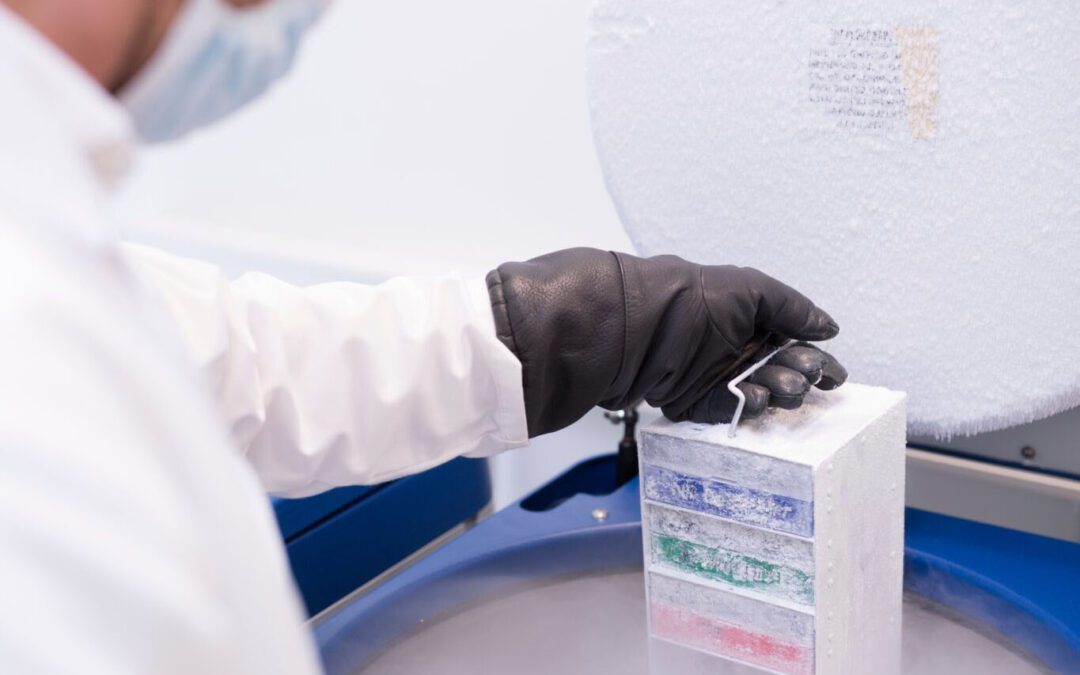
Ultra-low and cryogenic storage are critical for protecting temperature-sensitive pharmaceutical and biological materials throughout their lifecycle. Ultra-low storage is commonly associated with Ultra Low Temperature (ULT) freezers operating around -80°C, while cryogenic storage generally refers to conditions of -150°C and below. Depending on product-specific stability data, protocols, and handling requirements, these environments may be used to help preserve stability, potency, viability, or analytical integrity.
Materials that may require these conditions include pharmaceuticals, biologics, vaccines, biospecimens, active pharmaceutical ingredients (APIs), mRNA vaccines, monoclonal antibodies, and cell and gene therapies. Temperature excursions, improper handling, inadequate monitoring, or incomplete documentation can compromise product quality, create compliance concerns, and increase operational risk.
For this reason, ultra-low and cryogenic storage should be considered part of a broader product lifecycle, quality system, and regulatory readiness strategy. Precision Stability Storage provides controlled off-site ICH (International Council for Harmonisation) stability storage, GMP (Good Manufacturing Practice) biostorage, ultra-low storage, and cryogenic storage solutions designed to help pharmaceutical and biopharmaceutical organizations maintain appropriate storage conditions while supporting operational and compliance requirements.
Key Takeaways
- Ultra-low and cryogenic storage require more than maintaining a target temperature. Validated equipment, temperature uniformity, continuous monitoring, alarms, and documented response procedures are also essential.
- Storage requirements vary by material. Pharmaceuticals, biologics, vaccines, biospecimens, and cell and gene therapies should be stored according to product stability data, handling sensitivity, container closure systems, and applicable requirements.
- ICH Q1A(R2), cGMP principles, and FDA and EMA expectations support controlled processes, reliable documentation, trained personnel, and effective deviation management.
- Backup power, system redundancy, packaging, insulation, inventory controls, and chain of custody can all affect material integrity.
- When selecting an off-site storage partner, evaluate equipment qualification, monitoring coverage, backup systems, cGMP alignment, scalability, and experience with ultra-low and cryogenic materials.
- Precision Stability Storage supports sensitive materials through controlled off-site ICH stability storage, cGMP biostorage, ultra-low temperature storage, and cryogenic storage solutions.
What Is Ultra-Low and Cryogenic Storage?
Ultra-low storage commonly refers to mechanical freezer storage at temperatures around -80°C. These conditions may be used for certain pharmaceuticals, biologics, vaccines, active pharmaceutical ingredients (APIs), reagents, and biospecimens that require deep-frozen preservation to maintain stability, potency, or analytical integrity.
Cryogenic storage generally refers to temperatures of -150°C and below. Cryogenic systems are often supported by liquid nitrogen, which can reach temperatures of approximately -196°C, and are particularly important for certain cell and gene therapies, cell banks, and other biological materials where maintaining long-term viability is essential.
Ultra-low temperature (ULT) freezers and cryogenic storage systems serve different purposes and have different equipment, monitoring, handling, and safety requirements. The appropriate storage condition should be determined by product-specific stability data, formulation, container type, intended use, and established protocol requirements rather than temperature alone.
Why These Materials Require Special Handling
Pharmaceuticals, biologics, vaccines, biospecimens, and advanced therapy products can be sensitive to conditions beyond the storage temperature itself. Temperature excursions, repeated freeze-thaw cycles, agitation, light or oxygen exposure, and uncontrolled staging time can affect material quality, stability, or performance.
Biologics can be structurally complex and may be more sensitive to handling variability than many small-molecule pharmaceuticals. Cell and gene therapies may have additional requirements because storage and retrieval processes must help preserve viability, identity, and functionality, while products such as mRNA vaccines, monoclonal antibodies, and other vaccines may require storage strategies based on their specific formulations and stability data.
Packaging, container closure integrity, labeling, transfer procedures, and retrieval workflows also influence material integrity. Even routine operational factors such as freezer door openings, inventory density, rack placement, sample pulls, and emergency transfers can increase temperature exposure if they are not carefully controlled.
For this reason, handling procedures should be defined and documented through SOPs, personnel training, monitoring records, deviation procedures, and other quality system controls. Consistent workflows help reduce variability while supporting traceability and regulatory readiness.
Temperature Stability and Uniformity Should Come First
Reaching a required freezer setpoint is only one part of effective ultra-low and cryogenic storage. Temperature stability refers to the ability of equipment to maintain the required conditions over time, while temperature uniformity describes how consistently those conditions are maintained across different locations within a freezer, chamber, or cryogenic unit.
Temperature mapping can help identify hot and cold spots, determine recovery time following door openings, and reveal location-specific risks within the storage environment. Materials should then be placed in qualified storage locations that are appropriate for their required temperature range.
ULT freezer performance can also be influenced by access frequency, inventory arrangement, sample loading, and airflow. In cryogenic storage, organizations may also need to determine whether vapor-phase or liquid-phase storage is appropriate based on the material, storage protocol, and contamination risk profile.
Before materials enter storage, teams should establish acceptable temperature ranges, alert thresholds, excursion criteria, and documentation requirements. Defining these controls in advance helps support consistent storage performance and more effective responses when conditions begin to move outside established parameters.
Continuous Monitoring, Alarms, and Response Procedures Are Essential
Continuous monitoring provides real-time or near-real-time visibility into ultra-low and cryogenic storage conditions. Monitoring systems can help identify changes early, while alarms give personnel an opportunity to respond before a developing equipment or temperature issue compromises stored materials.
Alarm thresholds should reflect product requirements, equipment performance, and the amount of time available for an appropriate response. Depending on the quality system, automated notifications may be delivered through phone, email, or other escalation methods so the appropriate personnel can act quickly.
A complete monitoring strategy should also include documented response procedures. These procedures should identify who receives alerts, when escalation is required, where materials can be transferred if necessary, and how the event and resulting actions must be recorded.
Monitoring records can support internal quality reviews, investigations, audits, and regulatory inspections. When an excursion or deviation occurs, organizations should evaluate the root cause and potential product impact and document any necessary corrective and preventive actions.
Backup Systems and Redundancy Reduce the Risk of Material Loss
Ultra-low and cryogenic storage programs should be designed to account for equipment failures, power outages, liquid nitrogen supply interruptions, natural disasters, and other events that could threaten stored materials. For ULT freezers, reliable backup power is especially important because an extended loss of electricity can quickly affect temperature control.
Cryogenic storage programs require additional planning around liquid nitrogen supply, refill procedures, tank monitoring, and emergency response. Redundant freezers, tanks, or predefined contingency storage locations can provide an alternative when primary equipment becomes unavailable.
Preventive maintenance, emergency contact procedures, and clear escalation paths should also be part of the storage strategy. Disaster recovery plans should consider utility interruptions, severe weather, supply chain disruptions, and facility-level incidents so personnel know how to protect or transfer materials when necessary.
For organizations with limited internal capacity or infrastructure, off-site storage can also provide additional redundancy and reduce dependence on a single facility or storage system.
Compliance With ICH, cGMP, FDA, and EMA Expectations Must Be Built Into the Storage Program
Regulatory compliance should be incorporated into storage operations from the beginning rather than treated as a separate activity. Equipment qualification, monitoring, documentation, training, deviation management, vendor oversight, and record retention should all support the organization’s applicable quality and regulatory requirements.
ICH Stability Storage Requirements
ICH Q1A(R2) addresses stability testing for new drug substances and products and considers how environmental factors can affect quality over time. Stability data can help establish appropriate storage conditions, retest periods, and shelf life, making controlled ICH stability storage an important part of many pharmaceutical development and stability programs.
Storage teams should align conditions with applicable stability protocols, product specifications, filings, and internal quality procedures. Because requirements vary by material and program, ICH guidance should be applied alongside other applicable regulatory and product-specific requirements.
cGMP Documentation and Quality Controls
Current Good Manufacturing Practice, or cGMP, emphasizes controlled processes and appropriate quality systems for manufacturing, processing, packing, and holding drug products. For storage operations, supporting controls can include SOPs, equipment qualification, calibration, preventive maintenance, temperature records, change control, deviation documentation, and trained personnel.
Reliable records are particularly important when storage conditions or handling events need to be reviewed during an investigation, audit, or regulatory inspection. Documentation should provide a clear record of how materials were stored, monitored, handled, and transferred throughout their time in storage.
Vendor Qualification and Oversight
Organizations outsourcing storage should evaluate a vendor’s quality systems in addition to its available temperature conditions and capacity. Vendor qualification may include reviewing equipment qualification records, quality agreements, audit readiness, documented responsibilities, communication procedures, and processes for managing deviations or changes.
Storage conditions should ultimately remain aligned with product requirements, stability data, organizational quality policies, and applicable FDA, EMA, and other market expectations.
Packaging, Insulation, and Container Compatibility Affect Storage Outcomes
Packaging used for ultra-low or cryogenic storage must be appropriate for the intended temperature and handling conditions. Materials that become brittle, crack, lose seal integrity, or experience label failure at low temperatures can create risks for product protection, identification, and recovery.
Primary containers may include vials, cryovials, bags, plates, or other formats depending on the stored material. Secondary packaging can provide additional organization and protection while supporting accurate identification and traceability during inventory management and retrieval.
Insulation also becomes important when materials leave their primary storage environment. Receiving, staging, transport, and transfers between storage units should be planned to limit unnecessary temperature exposure and maintain required conditions.
Labels and barcodes should remain readable through expected storage and handling conditions so materials can be accurately identified throughout their lifecycle. Packaging and handling procedures should also support chain of custody and reduce unnecessary freeze-thaw cycles.
For certain cell-based materials, controlled-rate freezing and cryoprotective agents may be required before long-term cryogenic storage. These processes should follow the requirements established for the specific material and storage protocol.
Material Type Should Shape the Storage Strategy
Pharmaceuticals, biologics, vaccines, biospecimens, and advanced therapies should not be treated as interchangeable. Appropriate conditions depend on factors such as formulation, stability data, container closure system, handling sensitivity, intended use, and applicable quality requirements.
Pharmaceuticals
Pharmaceutical storage conditions should reflect available stability data, approved labeling, product specifications, or study protocols. Temperature and handling records should also provide sufficient documentation to support product quality decisions and regulatory review.
Storage providers may need to accommodate condition-specific inventory requirements, scheduled pulls, transfers, and other activities associated with stability or product management programs.
Biologics
Biologics storage can require particularly careful control of temperature exposure, handling, agitation, light exposure, and freeze-thaw cycles. Because biological products can be structurally complex, handling requirements should be based on the characteristics and stability data of the specific material.
Monoclonal antibodies and other biologics should therefore be stored under their established product-specific conditions. Procedures should also minimize unnecessary transfers and uncontrolled staging time during receipt, retrieval, and movement.
Vaccines
Vaccines may require controlled temperature conditions throughout storage, handling, and distribution. Requirements vary by formulation, and some products, including certain mRNA vaccines, may have specialized frozen storage needs.
Storage records should provide lot-level traceability and document relevant movements or handling events. Appropriate monitoring and inventory controls can help maintain visibility into the product’s storage history.
Cell and Gene Therapies
Certain cell and gene therapies may require cryogenic conditions to maintain cell viability, identity, and functionality. These materials can also require more complex workflows involving chain of identity, chain of custody, controlled-rate freezing, and defined transfer or thaw procedures.
Accurate inventory management and access controls are especially important for patient-specific or batch-limited materials. Storage programs should therefore limit access to authorized personnel and maintain clear records of location, handling, and movement.
Biospecimens
Biospecimens may require ultra-low or cryogenic storage to protect analytical integrity for future research, testing, or analysis. Requirements should be based on the type of specimen, downstream use, and established preservation protocol.
For a more detailed look at sample preservation in biobanking and clinical research, see How Cryogenic Storage Supports Biobanking and Clinical Trials.
Inventory Management and Chain of Custody Protect Material Integrity
Inventory control is an important part of ultra-low and cryogenic storage because missing materials, retrieval errors, and excessive search time can introduce both quality and operational risks. An inventory system should track information such as material identity, lot number, quantity, storage condition, receipt date, physical location, and movement history.
Location-level tracking helps personnel locate materials quickly, reducing unnecessary freezer door openings and temperature exposure during retrieval. Barcode systems and validated inventory workflows can also help reduce manual errors and maintain more accurate records.
Chain of custody documentation should identify who handled a material, when it was moved, and why the movement occurred. Transfers should include defined acceptance criteria and documented condition checks to verify that materials were received or relocated appropriately.
Access should also be limited to trained and authorized personnel. For patient-specific or certain clinical materials, maintaining chain of identity may be just as important as maintaining chain of custody.
Common Mistakes to Avoid in Ultra-Low and Cryogenic Storage Programs
Organizations evaluating an existing or planned storage program should watch for common gaps such as:
- Assuming that reaching a freezer setpoint alone demonstrates adequate product protection.
- Failing to temperature map or qualify storage equipment before use.
- Using packaging, containers, or labels that cannot withstand ultra-low or cryogenic conditions.
- Failing to establish alarm thresholds and escalation procedures before materials enter storage.
- Depending on a single freezer, power source, or liquid nitrogen supply path without appropriate redundancy.
- Allowing uncontrolled staging time during material receipt, retrieval, or transfer.
- Failing to investigate and document temperature excursions or deviations.
- Selecting an off-site provider based primarily on available capacity rather than monitoring, quality systems, and compliance support.
- Treating biologics, vaccines, biospecimens, and other sensitive materials as though they have identical storage requirements.
- Maintaining storage records that do not align with audit, regulatory filing, or internal quality requirements.
Identifying these gaps before materials enter storage can reduce operational risk and make it easier to maintain consistent, documented conditions over time.
Vendor Selection Matters for Off-Site Ultra-Low and Cryogenic Storage
Choosing an off-site storage provider requires evaluating more than available freezer space. A qualified provider should offer storage conditions that align with product requirements, whether an organization needs ICH stability storage, cGMP biostorage, ultra-low storage, cryogenic storage, or multiple conditions across a broader program.
Facilities should have appropriate monitoring systems, alarm escalation procedures, backup equipment, documented workflows, trained personnel, and business continuity plans. Organizations should also evaluate capabilities for receiving materials, inventory management, sample pulls, transfers, recordkeeping, deviation support, and quality documentation.
Vendor qualification may include reviewing equipment qualification, quality agreements, audit history, monitoring coverage, backup systems, and responsibilities between the organization and storage provider. Scalability should also be considered, particularly for companies with expanding pipelines, growing stability programs, or limited in-house freezer capacity.
Geographic reach can provide additional flexibility for multi-site programs and help organizations diversify storage operations. Precision Stability Storage provides off-site cGMP biostorage across conditions ranging from ambient to cryogenic, with facilities in California, Florida, Massachusetts, and North Carolina.
For organizations evaluating an off-site partner, a stability storage services checklist can help assess whether a provider supports both current storage requirements and future capacity needs without sacrificing quality controls, monitoring, documentation, or operational resilience.
Build a More Resilient Storage Strategy With Precision Stability Storage
Effective ultra-low and cryogenic storage requires coordinated planning across temperature control, monitoring, alarms, redundancy, packaging, inventory management, handling procedures, and compliance. A well-designed storage strategy helps protect product quality, material integrity, stability data, and operational continuity while giving organizations greater confidence in their ability to respond to equipment failures, excursions, or changing capacity needs.
Organizations with limited freezer capacity, growing pipelines, or complex storage requirements may benefit from working with a qualified off-site provider. Precision Stability Storage offers cGMP biostorage, ultra-low temperature storage, cryogenic storage, vaccine storage, and off-site ICH stability storage to support a range of pharmaceutical and biological materials. Contact Precision Stability Storage for a quote to discuss your storage requirements and determine the right solution for your program.
Ultra-Low and Cryogenic Storage for Pharmaceuticals and Biologics FAQS
What is the difference between ultra-low and cryogenic storage?
Ultra-low storage typically uses freezers around -80°C, while cryogenic storage generally operates at -150°C or below, often using liquid nitrogen.
Which materials may need ultra-low or cryogenic storage?
These may include biologics, vaccines, mRNA vaccines, monoclonal antibodies, biospecimens, cell banks, and cell and gene therapies.
Why is temperature uniformity important in ULT freezers?
It helps ensure materials remain within the required temperature range throughout the freezer.
What should a monitoring system include?
Continuous monitoring, defined alarm thresholds, automated alerts, escalation procedures, and accessible records.
How does cGMP apply to pharmaceutical and biologics storage?
cGMP supports documented procedures, trained personnel, qualified equipment, accurate records, deviation management, and quality oversight.
What does ICH Q1A(R2) mean for stability storage?
ICH Q1A(R2) provides guidance for stability testing of new drug substances and products, including how environmental factors support shelf life and storage conditions.
Why are backup systems important for ultra-low storage?
Backup power, redundant freezers, emergency procedures, and transfer plans help reduce the risk of material loss during equipment or facility failures.
What packaging factors matter at cryogenic temperatures?
Packaging should remain compatible with low temperatures, maintain container integrity, support readable labeling, and protect materials during handling and transfer.
When should organizations consider off-site storage?
Off-site storage can be useful when in-house capacity, staffing, monitoring, backup infrastructure, or compliance documentation cannot fully support the material’s risk profile.
How can Precision Stability Storage help?
Precision Stability Storage provides off-site storage solutions for ICH stability storage, cGMP biostorage, ultra-low temperature storage, and cryogenic storage needs.